
Animation Celebration of Terra Data!
Event
2025 NASA
Space Apps Challenge
Difficulty
Beginner/Youth
Intermediate
Advanced
Subjects
NASA’s oldest daily Earth-viewing satellite – Terra – just turned 25 years old, and with five continuously operating instruments onboard (most taking imagery at the same time), Terra has piled up a LOT of data over the years (over 9,000 days and counting!). This data has the potential to shed light on everything from scientific processes to unique events, all while helping solve problems that affect humans. Your challenge is to use data from any or all of Terra’s five instruments to create an animated product showcasing an Earth science story and emphasizing the impacts to you, your community, and/or the environment.
A World Away: Hunting for Exoplanets with AI
Event
2025 NASA
Space Apps Challenge
Difficulty
Advanced
Subjects
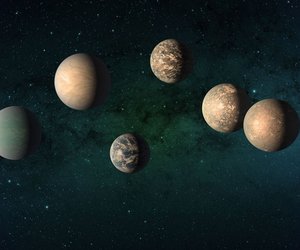
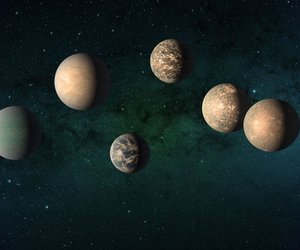
Data from several different space-based exoplanet surveying missions have enabled discovery of thousands of new planets outside our solar system, but most of these exoplanets were identified manually. With advances in artificial intelligence and machine learning (AI/ML), it is possible to automatically analyze large sets of data collected by these missions to identify exoplanets. Your challenge is to create an AI/ML model that is trained on one or more of the open-source exoplanet datasets offered by NASA and that can analyze new data to accurately identify exoplanets.
BloomWatch: An Earth Observation Application for Global Flowering Phenology
Event
2025 NASA
Space Apps Challenge


Difficulty
Beginner/Youth
Intermediate
Advanced
Subjects
Witness the pulse of life across our planet! From season to season and year to year, Earth’s vegetation is constantly changing, providing critical information on plant species, crops, seasonal effects, pollen sources, and changes in plant phenology (the relationship between seasonal changes and climate and biological phenomena in plants). Your challenge is to harness the power of NASA Earth observations to create a dynamic visual tool that displays and/or detects plant blooming events around the globe—just like pollinators do–and that advances solutions for monitoring, predicting, or managing vegetation.
Build a Space Biology Knowledge Engine
Event
2025 NASA
Space Apps Challenge
Difficulty
Beginner/Youth
Intermediate
Advanced
Subjects
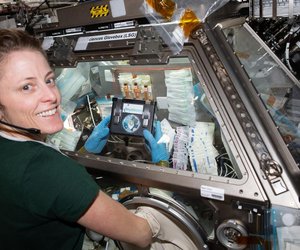
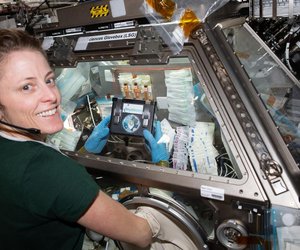
Enable a new era of human space exploration! NASA has been performing biology experiments in space for decades, generating a tremendous amount of information that will need to be considered as humans prepare to revisit the Moon and explore Mars. Although this knowledge is publicly available, it can be difficult for potential users to find information that pertains to their specific interests. Your challenge is to build a dynamic dashboard that leverages artificial intelligence (AI), knowledge graphs, and/or other tools to summarize a set of NASA bioscience publications and enables users to explore the impacts and results of the experiments these publications describe.
Commercializing Low Earth Orbit (LEO)
Event
2025 NASA
Space Apps Challenge
Difficulty
Intermediate
Advanced
Subjects
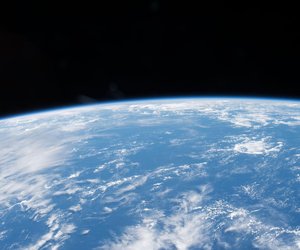
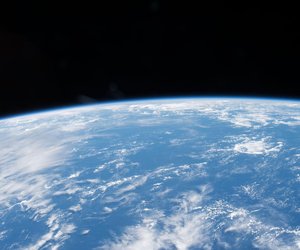
As the commercialization of space rapidly accelerates, the future of business in low Earth orbit (LEO) holds incredible potential, but also presents significant operational, regulatory, and environmental challenges. This new economic frontier invites innovative and sustainable approaches to foster long-term viability and responsible execution. Your challenge is to conceptualize and design a scalable, sustainable, business model, accompanied by a prototype, that explores the unique opportunities LEO offers while addressing the complexities of operating in space.
Create Your Own Challenge
Event
2025 NASA
Space Apps Challenge
Difficulty
Beginner/Youth
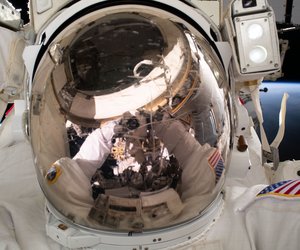
Do you have an idea that doesn’t quite fit into any of our challenges? Looking for beginner experience? This is your moment to dream big and Create Your Own Challenge! Whether you want to create an app, artwork, story, lesson, tool, or explore an innovative way to use NASA data, you set the challenge. Please note that while some Local Events may offer awards for "Create Your Own Challenge" projects, this challenge is not eligible for Global Judging, and projects do not qualify for Global Awards.
Data Pathways to Healthy Cities and Human Settlements
Event
2025 NASA
Space Apps Challenge
Difficulty
Intermediate
Advanced
Subjects
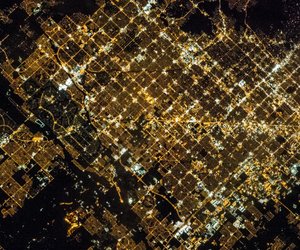
Climate change brings about new complexities to consider for maintaining the wellbeing of society and the environment in cities. Natural resources, ecosystems, and existing infrastructure all must be monitored to ensure human quality of life remains high. Your challenge is to demonstrate how an urban planner can use NASA Earth observation data to develop smart strategies for city growth that maintain both the wellbeing of people and the environment.
Deep Dive: Immersive Data Stories from Ocean to Sky
Event
2025 NASA
Space Apps Challenge
Difficulty
Intermediate
Advanced
Subjects
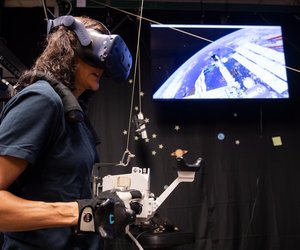
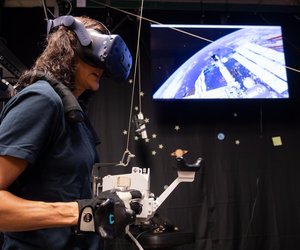
Satellite observations reveal insights about our dynamic home planet to scientists, but people without a remote sensing background often find the stories within these datasets difficult to access. NASA’s open data policy makes these observations available to everyone—scientists and non-scientists alike. Your challenge is to build a short, immersive, virtual reality (VR) experience that leverages NASA’s Earth observation datasets and visualizations to bring stories about our planet’s oceans to life, connecting a broad audience to this data, its beauty, and its impact. Using visuals, spatial audio, and even interactive elements, your VR experience can enable users to dive deeper into Earth’s unfolding ocean story.
Embiggen Your Eyes!
Event
2025 NASA
Space Apps Challenge
Difficulty
Intermediate
Subjects
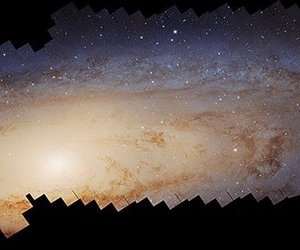
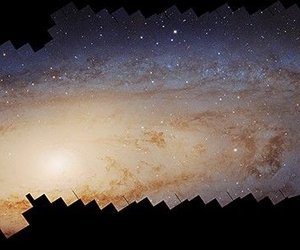
While your cell phone screen can display about three million pixels of information and your eye can receive more than ten million pixels, NASA images from space are even bigger! NASA’s space missions continue to push the boundaries of what is technologically possible, providing high-resolution images and videos of Earth, other planets, and space with billions or even trillions of pixels. Your challenge is to create a platform that allows users to zoom in and out on these massive image datasets, label known features, and discover new patterns.
From EarthData to Action: Cloud Computing with Earth Observation Data for Predicting Cleaner, Safer Skies
Event
2025 NASA
Space Apps Challenge
Difficulty
Intermediate
Advanced
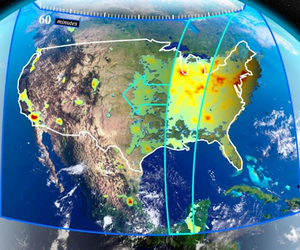
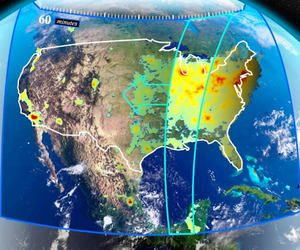
NASA’s Tropospheric Emissions: Monitoring of Pollution (TEMPO) mission is revolutionizing air quality monitoring across North America by enabling better forecasts and reducing pollutant exposure. Your challenge is to develop a web-based app that forecasts air quality by integrating real-time TEMPO data with ground-based air quality measurements and weather data, notifying users of poor air quality, and helping to improve public health decisions. Teams are encouraged to utilize new technologies that allow seamless scaling of computing from local devices to cloud systems, enhancing collaboration and streamlining work efficiency.
Subjects
International Space Station 25th Anniversary Apps
Event
2025 NASA
Space Apps Challenge
Difficulty
Intermediate
Advanced
Subjects
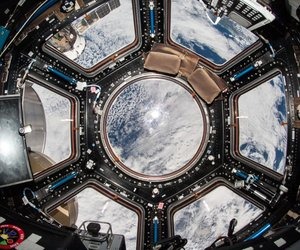
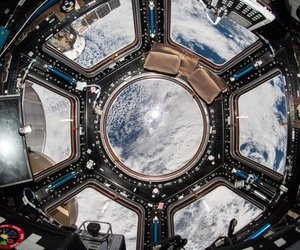
Crews onboard the International Space Station have many unique opportunities! They witness breathtaking Earth views from the station’s cupola—known as “the window to the world.” They also experience weightlessness and go outside the station on spacewalks, for which they must train extensively in the Neutral Buoyancy Laboratory (NBL) at the Sonny Carter Training Facility in Houston, Texas. Your challenge is to create a visual tool that not only helps students and the public understand two of the most prominent sensory experiences on the station (sight and weightlessness) through the lens of the cupola and the NBL, but also informs them how these unique experiences benefit humans on Earth.
Meteor Madness
Event
2025 NASA
Space Apps Challenge
Difficulty
Beginner/Youth
Intermediate
Advanced
Subjects
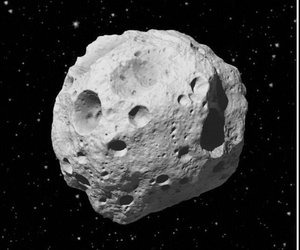
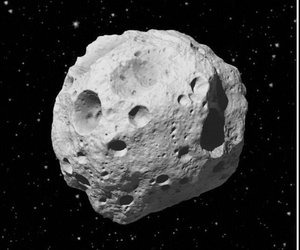
A newly identified near-Earth asteroid, "Impactor-2025," poses a potential threat to Earth, but do we have the tools to enable the public and decision makers to understand and mitigate its risks? NASA datasets include information about known asteroids and the United States Geological Survey provides critical information that could enable modeling the effects of asteroid impacts, but these data need to be integrated to enable effective visualization and decision making. Your challenge is to develop an interactive visualization and simulation tool that uses real data to help users model asteroid impact scenarios, predict consequences, and evaluate potential mitigation strategies.
NASA Farm Navigators: Using NASA Data Exploration in Agriculture
Event
2025 NASA
Space Apps Challenge
Difficulty
Intermediate
Advanced
Subjects
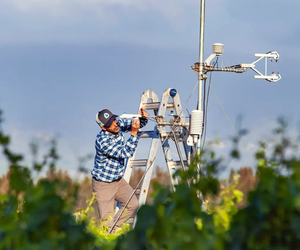
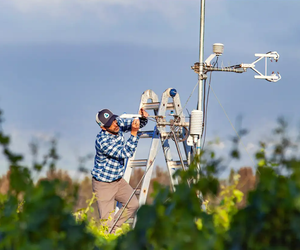
The agriculture community faces the challenge of integrating technology and data to enhance sustainable farming practices. Simulating key farming activities like fertilizing, irrigating, and livestock management using real-world NASA satellite imagery and climate data can enable better understanding of the impacts of these variables on crop production. Your challenge is to create an engaging educational game that effectively utilizes NASA’s open data sets to simulate farming scenarios and enables players to learn how this data can inform innovative, sustainable, agricultural methods.
Sharks from Space
Event
2025 NASA
Space Apps Challenge
Difficulty
Advanced
Subjects
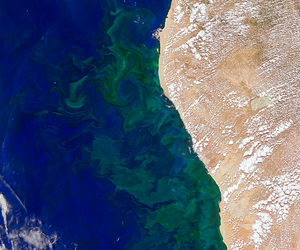
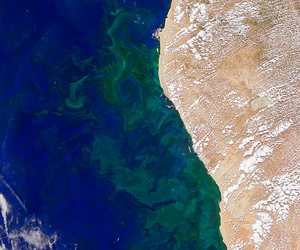
Earth’s ocean is one of the most powerful habitats in our universe, supporting a range of life that sustains ecosystems and habitability across the globe. It is common to measure photosynthetic activity in the ocean from space, but far more challenging to track top predators. Your challenge is to create a mathematical framework for identifying sharks and predicting their foraging habitats using NASA satellite data, and also to suggest a new conceptual model of a tag (a small electronic device that can be attached to an animal to track and study its movement) that could measure not only where sharks are, but what they are eating, and in real time transmit that data back to users to enable development of predictive models.
SpaceTrash Hack: Revolutionizing Recycling on Mars
Event
2025 NASA
Space Apps Challenge
Difficulty
Intermediate
Advanced
Subjects
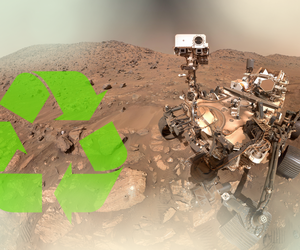
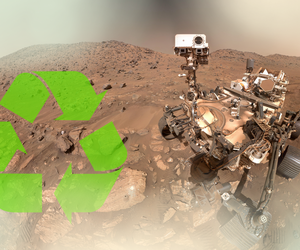
During a hypothetical three-year mission to Mars and back, an eight-person crew would accumulate 12,600 kg of inorganic waste, or trash, including various packaging materials, textiles, and structural materials. This scenario creates a pressing need to recycle available materials, rather than execute the expensive and inefficient processes of transporting additional resources from Earth and/or sending trash back to Earth. As humans prepare to explore unknown worlds in the future, your challenge is to design sustainable systems that could manage, reuse, or recycle inorganic waste (“trash”) that is brought to and/or accumulated on the surface of Mars.
Stellar Stories: Space Weather Through the Eyes of Earthlings
Event
2025 NASA
Space Apps Challenge
Difficulty
Beginner/Youth
Intermediate
Advanced
Subjects
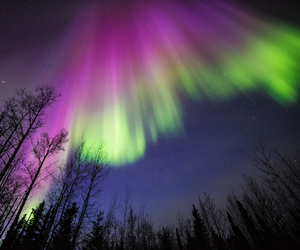
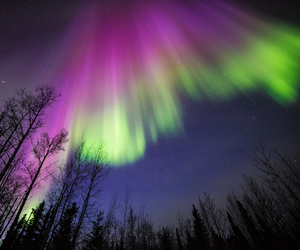
Although the Sun is 93 million miles away from our planet, solar activity can significantly impact our daily lives. “Space weather”—the variations that occur in the space environment between the Sun and Earth—can impact technologies in space and on Earth. Your challenge is to write and illustrate a digital children’s story that explains what space weather is and the varying impacts it has on different people such as farmers, pilots, astronauts, power grid operators, and the general public. You can tell the story from the perspective of a person impacted by space weather or from the point of view of a solar flare or coronal mass ejection (CME) as it approaches Earth.
Through the Radar Looking Glass: Revealing Earth Processes with SAR
Event
2025 NASA
Space Apps Challenge
Difficulty
Intermediate
Advanced
Subjects
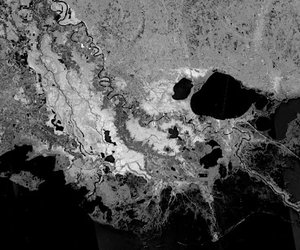
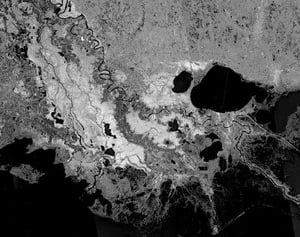
Like Alice in Wonderland, let’s travel down the rabbit hole… to reveal a world that looks like our planet Earth… but not quite! Using synthetic aperture radar (SAR), we can image the world by emitting radar pulses toward Earth and recording the energy that is reflected back after the signals interact with Earth's surface. Your challenge is to download multi-frequency or multi-polarization SAR data for an interesting study area of your choice –e.g., your hometown, a tropical wetland, ice sheet, forest wildfire, flooded neighborhood, volcano eruption, etc.—and use that data to develop hypotheses about the physical drivers operating there.
Will It Rain On My Parade?
Event
2025 NASA
Space Apps Challenge
Difficulty
Intermediate
Subjects
If you’re planning an outdoor event—like a vacation, or a hike on a trail, or fishing on a lake—it would be good to know the chances of adverse weather for the time and location you are considering. There are many types of Earth observation data that can provide information on weather conditions for a particular location and day of the year. Your challenge is to construct an app with a personalized interface that enables users to conduct a customized query to tell them the likelihood of “very hot,” “very cold,” “very windy,” “very wet,” or “very uncomfortable” conditions for the location and time they specify.
Your Home in Space: The Habitat Layout Creator
Event
2025 NASA
Space Apps Challenge
Difficulty
Intermediate
Subjects
Space habitats are “homes in space” that keep crew members healthy and able to execute their mission. Whether located on a planetary surface or in space, habitats must support critical functions such as waste management, thermal control, life support, communications, power, stowage, food storage and preparation, medical care, sleep, and exercise. Space habitat concepts can involve a diverse array of materials, geometries, and layouts. Your challenge is to create a visual tool that enables users to define a space habitat’s shape/volume and explore possible layout options.